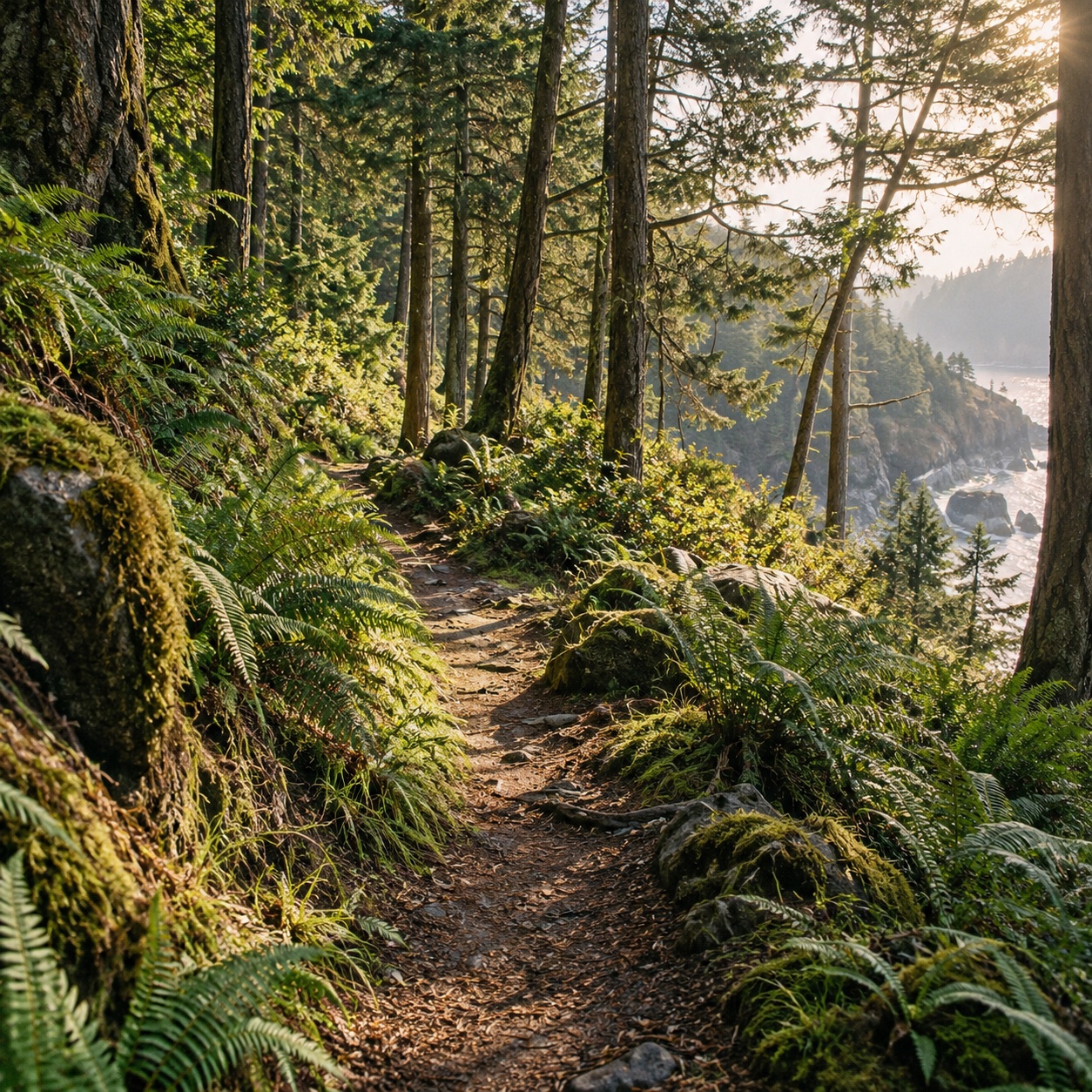
A route is usually a problem we try to solve: the fewest turns, the shortest distance. But a walk can serve a different purpose. Choose the street with the trees. Follow the sound of water. Pause where the pavement catches the rain.
The longer way does not have to be far away. It might be the other side of a familiar street, an extra turn around the block, or the footpath you usually pass without thinking. What changes is less the distance than the permission to be curious.
One small detail can be reason enough for a detour.
Let one thing lead to another. A patch of shade becomes a place to stop. A bend in the path opens a new view. The light through the trees asks for a few more minutes. There is no itinerary to complete, and nothing to fall behind on.
There is no need to collect a remarkable experience. One small detail is enough: a blue door, a leaf caught in a fence, a slice of sky between buildings. Notice it, and let that be the reason for the detour.
Home will still be where you left it. The walk may only have taken a little longer. But the day has gained something that was not on the shortest route: a small stretch of time spent looking instead of arriving.